
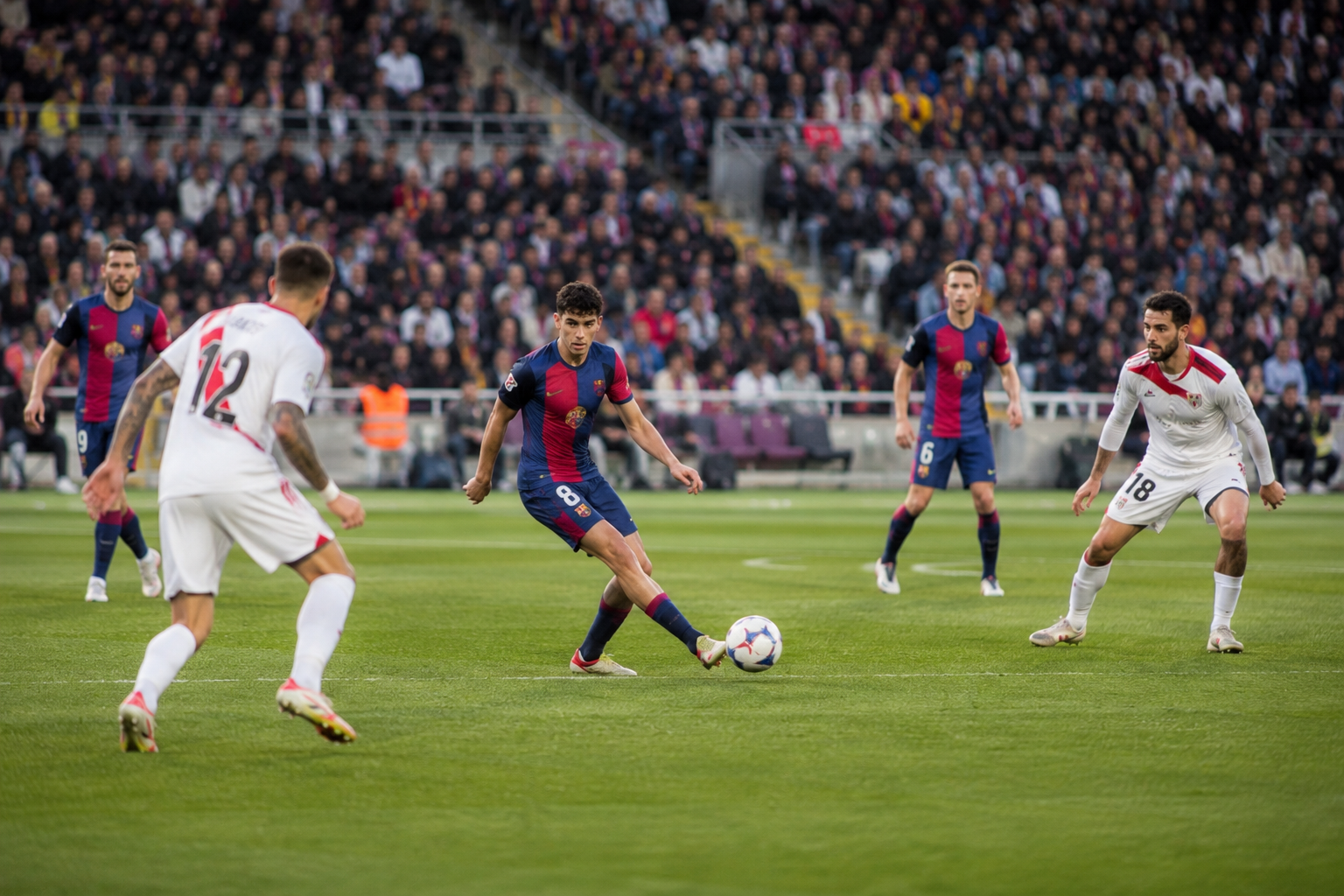
Spanish football has a distinctive rhythm. Matches in La Liga often combine technical precision, intelligent movement and carefully constructed attacking patterns, creating contests in which small positional details can have a significant influence on the result. A spectacular goal may become the defining image of a fixture, but the decisions leading up to it are often just as interesting. Watching La Liga match replays gives supporters the opportunity to revisit these encounters and discover the ideas, movements and tactical choices that shape Spanish football.
The appeal of the competition lies partly in its variety. Some teams prefer patient possession and intricate combinations, while others rely on aggressive pressing, direct attacks or compact defensive structures. These contrasting philosophies make the Spanish championship particularly rewarding for viewers who enjoy examining how football is played, not simply following the final score.
A Football Culture Built Around Technical Detail
Technical ability has long been associated with Spanish football. Accurate passing, close control and intelligent positioning are important elements of many teams’ approaches, although the modern competition includes a much wider range of styles than any single description can capture.
In possession, players are expected to make decisions quickly while maintaining the technical quality needed to operate in limited spaces. A midfielder receiving the ball under pressure may need to turn away from an opponent, find a passing option and recognise an opportunity to advance within a fraction of a second.
These moments can be difficult to appreciate during a live broadcast because attention naturally follows the ball. A second viewing makes it easier to notice the supporting movements that create space and allow combinations to develop. A forward may drop towards midfield to draw out a defender, while a teammate moves into the area that has just become available.
This coordinated movement is one of the reasons Spanish matches can be so engaging from a tactical perspective. The quality of an attack is not always determined by the final pass. It may depend on several small decisions made by players who are not directly involved in the scoring action.
Possession Is a Tool, Not an Objective
Spanish football is frequently associated with possession-based play, but keeping the ball does not automatically mean controlling a match. Effective possession requires purpose. Teams must use passing sequences to create advantages, move opponents out of position and reach areas from which meaningful attacks can develop.
A side may circulate the ball across the defensive line to encourage the opposition to press. Once an opponent commits players forward, a passing lane can open in midfield. A quick vertical pass then changes the tempo and allows the attacking team to move towards the penalty area.
The timing of these transitions is essential. If a team passes too slowly, the opposition has time to recover its defensive shape. If it attempts to accelerate without sufficient support, possession can be lost in a dangerous area.
Rewatching a complete match reveals how teams manage this balance. Supporters can observe when a side chooses to slow the game down, when it attempts to increase the tempo and how the opposition responds. These patterns often explain why one team appears comfortable in possession while another struggles to regain control.
The Tactical Identity of Spain’s Major Clubs
La Liga brings together clubs with different histories, resources and footballing philosophies. Their identities have developed over many seasons, influenced by coaching traditions, academy structures and the expectations of their supporters.
<escape> </escape>Teams associated with possession-oriented football often emphasise technical midfield play and coordinated movement between the lines. Other clubs may prioritise defensive organisation, physical intensity or rapid transitions. Even within the same club, the approach can change significantly when a new manager introduces different principles.
This variety makes direct comparisons particularly interesting. Two teams can have similar levels of technical ability but use their strengths in different ways. One may attempt to dominate the centre of the pitch, while the other deliberately creates space in wide areas. Their meeting becomes a contest between competing ideas rather than simply a comparison of individual players.
Full match footage helps reveal these identities in practice. It allows viewers to see whether a club maintains its preferred approach under pressure or changes its behaviour when facing a difficult opponent. The most revealing moments are sometimes those in which a team struggles, because they show how effectively its tactical structure responds to unexpected situations.
Reading the Game Through Movement Between the Lines
One of the most interesting aspects of Spanish football is the use of space between defensive and midfield units. These areas can become valuable attacking zones when players position themselves intelligently and receive the ball facing the opposition’s goal.
An attacking midfielder may move into a narrow pocket of space behind the opponent’s central midfielders. If the pass reaches its target, the player can turn and create an immediate threat. However, the receiving position must be prepared carefully. Teammates may need to move defenders away, provide passing options or prevent the opposition from closing the space.
Defending these situations requires coordination. Midfielders must recognise when to follow an opponent and when to protect the central area. Centre-backs must decide whether to step forward or maintain the defensive line. A poorly timed movement can create a gap that an intelligent attacker will exploit.
Watching the full sequence makes these decisions easier to understand. Instead of seeing only a successful pass or a blocked attack, supporters can follow the movements that determined whether the opportunity was created.
The Importance of Regional Football Traditions
Spanish football is not defined by a single playing style. Different regions and clubs have developed distinctive traditions, and these differences contribute to the character of the national championship.
The rivalry between major clubs often receives international attention, but the broader competition includes teams with their own local identities and established football cultures. Their approaches may reflect the preferences of supporters, the work of local academies and the strategic priorities of individual managers.
Some clubs place particular emphasis on developing technically confident players who understand several positions. Others have built competitive teams through disciplined organisation and a strong collective mentality. There are also sides that rely on energetic pressing and quick attacking transitions to challenge opponents with greater financial resources.
These differences make the league more interesting than a competition dominated by a small number of familiar names. A match involving teams outside the title race can offer an equally valuable lesson in tactical organisation, player development and coaching innovation.
How a Match Changes When the Original Plan Stops Working
Even well-prepared teams encounter problems. An opponent may press more aggressively than expected, close important passing lanes or target a weakness on one side of the pitch. When this happens, managers must decide whether to maintain their original approach or introduce adjustments.
A team that normally builds attacks through short passes may begin using longer deliveries to bypass pressure. Another may move a midfielder closer to the defenders to create an additional passing option. Changes can also involve individual responsibilities rather than an entirely different formation.
The ability to respond is especially important in a competition where teams regularly face different tactical challenges. A successful side must have more than one way to create opportunities and protect its goal.
Repeated viewing allows supporters to identify the moments when a match begins to change. It becomes possible to compare the team’s organisation before and after a tactical adjustment, examine how substitutions influence the contest and understand why a promising performance may lose momentum.
Young Players and the Future of Spanish Football
Youth development remains an important part of the Spanish football landscape. Academies provide clubs with opportunities to develop players who understand their preferred style from an early age, while also creating pathways for emerging talent to reach professional competition.
Young footballers must learn more than technical skills. They need to understand positioning, timing and decision-making in situations where opponents have very little space to make mistakes. A midfielder may be technically gifted but still require experience before consistently recognising when to retain possession and when to attempt a more ambitious pass.
Full matches can provide a better perspective on this development than short highlight packages. Supporters can observe how a young player behaves without the ball, whether they maintain concentration throughout the contest and how they respond after making a mistake.
The progress of emerging talent is rarely linear. Some players adapt quickly to senior football, while others need more time, different responsibilities or opportunities in another environment. Their development adds another dimension to following the competition.
Discovering More Than the Final Result
A football result tells supporters who won, but it does not necessarily explain how the contest was decided. In La Liga, the difference between two teams can emerge through subtle technical details, positional discipline or the ability to recognise a tactical opportunity at the right moment.
A complete replay offers the chance to explore these elements without the pressure of following the action in real time. Viewers can pay attention to the positioning of midfielders, the movement of forwards and the defensive decisions that shape the flow of the match.
This approach also makes it easier to appreciate performances that do not receive immediate recognition. A player may influence the game through intelligent positioning rather than spectacular actions, while a team’s success may depend on disciplined work that remains largely invisible in a short summary.
Spanish football rewards attention to detail. Its most interesting stories often emerge through the connections between individual technique, collective movement and tactical intelligence. Looking beyond the scoreline reveals why those elements matter and how they combine to give La Liga its distinctive character.